
The Tayal family, which has promoted companies such as Bank of Rajasthan and KSL Realty and Infrastructure, is foraying into high-end luxury retail with flagship store K Lifestyle.
Retail major Shoppers' Stop, part of the K Raheja Corp, is consolidating its luxury retail business by roping in over 40 global brands and has lined up Rs 500 crore

Jaguar Land Rover (JLR) India reported its highest-ever first-quarter retail sales for FY27, with 1,665 vehicles retailed, an 11 per cent year-on-year increase, largely due to sustained demand for premium SUVs and the benefits of the India-UK Free Trade Agreement.

Namrata Karad, founder of Ahikoza by BRHAM, opens up about going from working on a Hugo Boss sales floor to seeing her bags carried by Alia Bhatt, Kareena Kapoor, Kylie Jenner, Khloe Kardashian...

Urban Indian millennials are caught in an algorithmically amplified consumption spiral where social media normalises spending patterns that systematically undermine retirement security.

A cyberattack on an automaker can spread through its wider supply chain and create significant financial losses.

World's Top 5 Airports of 2026 based on votes from passengers across the globe in the 2025-2026 World Airport Survey by SKYTRAX.

What we will not do is discount deeply, neither will we compromise on product substance, says Managing Director and Chief Executive Officer (MD&CEO) Santosh Iyer.

Indian airports are rapidly becoming a significant growth avenue for the country's retail sector, with brands across various consumer segments actively opening stores to tap into the increasing number of flyers and strong domestic tourism momentum.

The Dubai-born model-turned-actor, who also went viral as the internet's favourite Champions Trophy 'mystery girl', doesn't just collect fashion moments; she collects handbags most of us will only ever see behind luxury store windows.

India's food safety regulator, FSSAI, has issued notices to five-star hotels JW Marriott and Andaz Delhi following inspections that revealed serious hygiene and food-safety violations, including cockroach infestations, expired food, poor sanitation, and improper food storage.

Travel is now the dominant spending category for India's affluent consumers, who are prioritising experiences and luxury goods over retail buying, according to a new report.
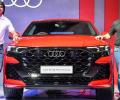
German carmaker Audi plans to reassess and adjust its product launch strategy in India once the specific details of import duty reductions under the India-EU free trade agreement (FTA) become clear, according to Balbir Singh Dhillon, the brand's director in India.
Large format shopowners look outside malls for spaces with international look & feel.

Rising income feels like success but unchecked lifestyle inflation traps urban professionals into financing a more expensive version of living paycheck-to-paycheck -- buying material upgrades instead of true future financial freedom.
The luxury retail market, which is currently in its nascent stage was roughly estimated to be around Rs 1,500 crore (Rs 15 billion) and expected to grow at 20 per cent in next five years. The booming stock market and the recent news that India's leading industrialist, Mukesh Ambani, had even overtaken Bill Gates, to become the richest person in the world, is an indication that the country was ready for that ultimate 'haute couture' experience.

Indian liquor brands are increasingly focusing on Hindi heartland states like Uttar Pradesh, Rajasthan, and Haryana as the next major growth engine for premiumisation, driven by expanding luxury portfolios, craft spirit launches, and upgraded retail experiences, as state governments embrace reforms.

Luxury design by Pininfarina meets everyday performance in the latest Infinix Note 60 series smartphone.

Absence of quality real estate in malls and on high street seen as factors behind migration.

The luxury carmaker plans to drive growth through local assembly of the MINI Countryman, expansion into 10 new cities and a broader product portfolio.

India's luxury auto market is rebounding after a slow start to 2025, with GST 2.0 emerging as the main catalyst.

Indian paint majors, including Asian Paints, Berger Paints, and Kansai Nerolac, reported better-than-expected performance in Q4FY26, driven by steady demand, improved product mix, and strategic price hikes. The sector is also benefiting from reduced competitive intensity as new players also increase prices, narrowing the gap with incumbents.

Tata Motors' MD and CEO, Girish Wagh, has identified rising diesel prices as the most significant threat to India's commercial vehicle (CV) industry recovery, despite the sector recently surpassing its pre-FY19 wholesale peak. Diesel costs account for 25-50% of a truck operator's total cost of ownership, making any increase a critical concern for fleet economics.

The East India Company, revived by Indian businessman Sanjiv Mehta in 2010, has ceased operations and entered liquidation, marking the end of its modern incarnation.

The managing director of Reliance Retail Ventures Limited turned heads in a vintage Valentino for her debut at the Oscars 2026.

The inauguration of Noida International Airport (NIA) is set to significantly increase property values in micro-markets along the Yamuna Expressway, with projections indicating a 28 per cent rise for plots and 22 per cent for apartments over the next two years, according to Colliers.
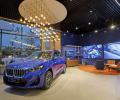
Armed with swanky showrooms, decked with plush fixtures, and offering indulgences such as high-end perfumes and customisable accessories, BMW, Mercedes, Audi are rolling out the red carpet for the well-heeled.

'The West Asia or the Gulf crisis has shown that what we develop as national infrastructure when things are not as bad as they could be, we forget to plan for adversities.'

Using a trading terminal is not suitable for all market participants. Before market participants start using a trading terminal, it is important for them to know who really needs a trading terminal and what they can do with it. Here, we will explore who should actually use a trading terminal.
For the first time in history, the luxury car market is poised to cross the sales mark of 50,000 units in 2024, with Mercedes leading the way

While GST on ICE vehicles was brought down significantly, for electric cars it remained at 5 per cent.

'The retail business was somewhat slow initially, but it has picked up over the past seven to eight days. Following Makar Sankranti, there is a renewed sense of positivity.'

High-street rentals continue to outpace those of malls, as retailers focus on prime locations and are willing to pay a premium for visibility. Between 2021 and 2025, rental values on prime high street have grown 7-15 per cent annually, driven by strong consumption density and limited new supply, even outpacing grade A malls, which grew by 5-8 per cent, according to Anarock.

Because of high rents in Mumbai and the response from Delhi, most luxury retail players want to expand in the capital.

Data from used-car platforms suggest that buyer preferences have remained broadly stable post-GST, with SUVs retaining their dominance even as price adjustments played out across segments.

The GST Council at its next meeting may consider a reduction in taxes on air and water purifiers as air quality across the country worsens and access to safe drinking water remains uneven.

The Indian stock market in the October-November period sees high trading activity due to increased consumer spending, festive demand, upbeat sentiment, renewed investor confidence, and the auspicious Muhurat trading session. This impacts many stocks and sectors in the festive season.

Electric passenger vehicle (PV) retail sales jumped more than twofold in September with Tata Motors (TaMo) leading the pack having over 6,000 registrations and a 40 per cent market share.
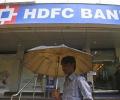
Financial services giant HDFC Bank, carrying a brand value of $44.9 billion, has surged past IT consulting behemoth Tata Consultancy Services (TCS) to reclaim its crown as the country's most valued brand, according to the 2025 Kantar BrandZ Most Valuable Indian Brands report.
